Every business I’ve worked with has said some version of this:
“Our team is too slow. We miss deadlines. Things take forever.”
And every time, I ask the same question:
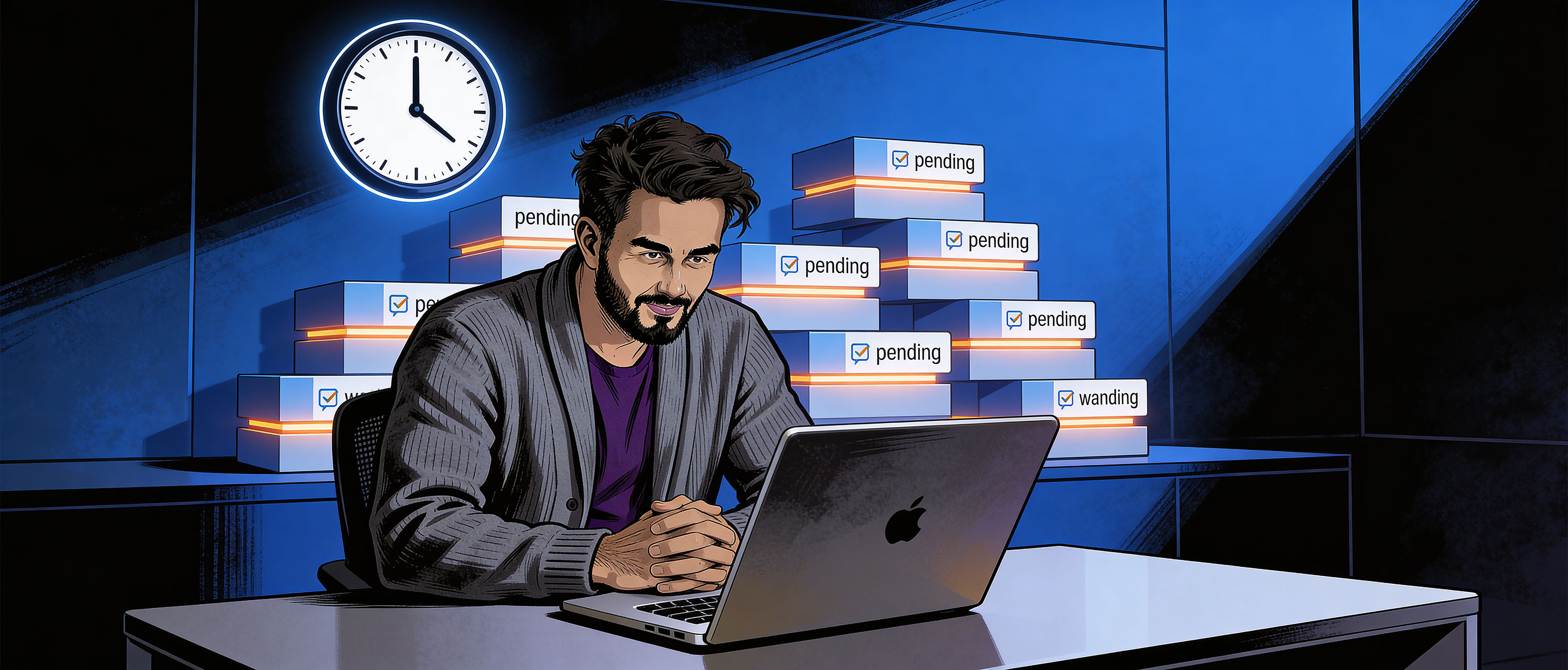
Are they actually slow… or are they stuck waiting?
Because in most companies, “slowness” isn’t a people problem.
It’s a system problem.
What leaders see: missed dates, delayed launches, long cycles.
What teams feel: blockers, approvals, tool chaos, unclear priorities, constant interruptions.
Your best people often work the hardest inside the worst systems—and then get blamed for the result.
Work Rarely Takes Weeks. Waiting Does.
In a “slow” organization, the actual work usually takes hours.
The waiting takes weeks.
Work gets stuck in queues:
Waiting for prioritization.
Waiting for approvals.
Waiting for feedback.
Waiting for reviews.
Waiting for deployment windows.
So when something takes “three weeks,” it’s often not because someone typed slowly.
It’s because the work item spent its life in wait states.
Your team is not slow.
Your system is making them slow.
Resource Efficiency vs Flow Efficiency
Most companies optimize for the wrong thing.
They optimize for resource efficiency:
Keep everyone busy.
Keep everyone utilized.
Fill every hour.
But speed in knowledge work doesn’t come from busy people.
Speed comes from moving work through the system.
That’s flow efficiency.
In many organizations, flow efficiency is painfully low.
Meaning: a project that takes 30 days may have only a few hours of real work inside it.
The rest is friction.
So the fix is not:
Hire faster people.
Push harder.
Add more standups.
The fix is:
Remove wait states.
Reduce friction.
Improve flow.
Context Switching Is a Throughput Killer
Broken systems create a second problem leaders underestimate:
Context switching.
When a person is blocked, a manager says:
“Pick up something else while you wait.”
It sounds logical.
It’s also destructive.
Because switching costs compound.
People lose momentum.
Reload context.
Regain focus slowly.
And the more parallel projects someone juggles, the more output disappears.
So when leadership says, “Multitask to move faster,” they often do the opposite.
They create motion.
They kill progress.
When Speed Feels Unsafe, Teams Slow Down on Purpose
In broken systems, speed becomes risky.
Teams learn that shipping faster breaks things more often.
So they protect themselves:
Deployments become rare.
Releases get larger.
Approvals increase.
Process gates multiply.
Then big releases create bigger failures.
Fear rises.
Leadership adds more process.
And everything slows down again.
Pressure does not fix a system.
It usually makes it more brittle.
What I Fix First: Bottlenecks, Not Motivation
If you want real speed, don’t start with speeches.
Start with visibility.
Map the path from idea to delivery.
Measure touch time vs wait time.
Find where work piles up.
Then fix the constraint.
Because removing one bottleneck often creates more capacity than hiring three people.
That’s the operator move:
Not “work faster.”
Fix the road.
What to Do Next
- Track where work waits: approvals, reviews, environments, releases.
- Reduce work-in-progress so items finish instead of piling up.
- Protect focus: stop multitasking across multiple projects.
- Map the value stream and fix the single biggest bottleneck first.
- Standardize the new flow so it doesn’t decay in 60 days.
The Operator Takeaway
If your team feels slow, don’t start by questioning work ethic.
Start by questioning the system.
Most “slowness” is waiting.
Created by overloaded capacity, invisible queues, broken workflows, and constant interruptions.
Before you ask: “Why aren’t they moving faster?”
Ask: “What is blocking this work from flowing?”
Fix the system.
And speed becomes natural.




.svg)